

Southern Santa Catarina has taken a strategic step to strengthen regional tourism with the official launch of Integratur, a platform created to connect destinations, entrepreneurs, itineraries, and experiences in the cities that make up the Association of Municipalities of the Carbonífera Region (Amrec), comprising Balneário Rincão, Cocal do Sul, Criciúma, Forquilhinha, Içara, Lauro Müller, Morro da Fumaça, Nova Veneza, Orleans, Siderópolis, Treviso, and Urussanga.
The event took place at the Criciúma Innovation Center (CRIO) last Friday (15) and brought together political leaders, representatives from the tourism sector, travel agents, entrepreneurs, and national industry specialists.
Developed by Unesc in collaboration with Amrec, the program was created with the goal of consolidating the Carbonífera Region as an integrated, competitive tourist destination aligned with the new demands of the national market.
More Connected, Experience-Driven Tourism
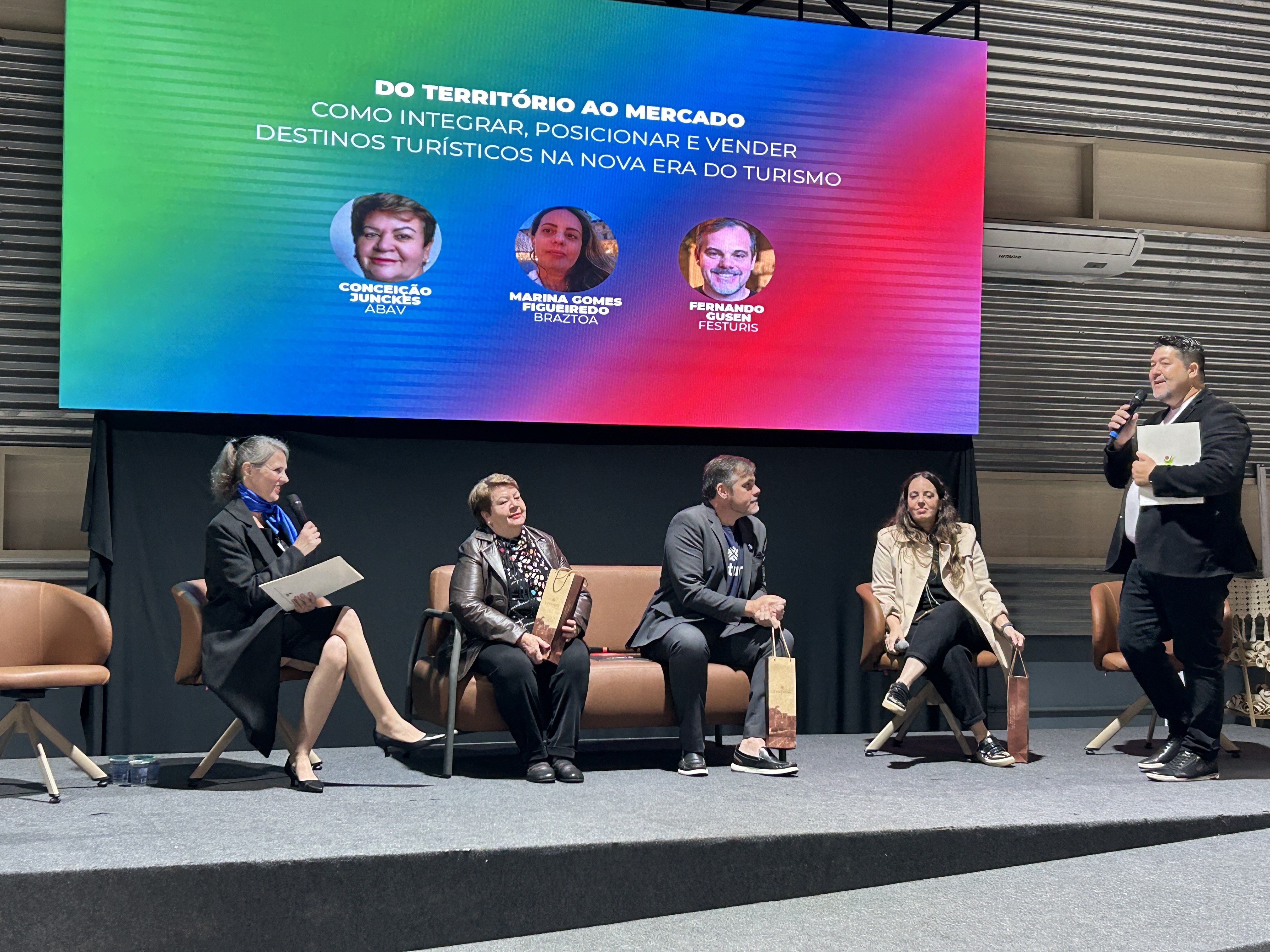
One of the highlights of Integratur was the roundtable discussion titled “The Age of Tourism,” which brought together national experts to discuss the future of the sector in light of changing traveler behavior.
The speakers were Fernando Gusen, from Festuris – Gramado International Tourism Fair; Conceição Junckes, from the Brazilian Association of Travel Agencies (ABAV); and Marina Figueiredo, from the Brazilian Association of Tour Operators (BRAZTOA).
During his remarks, Fernando Gusen emphasized that the growth of tourism depends on collaboration between municipalities, business owners, operators, and institutions. The conclusion reached at the meeting was that regions that organize collectively manage to enhance their competitiveness and increase their capacity to attract investments and visitors.
“It is very important to build in an integrated manner among municipalities and in harmony between the private sector and public authorities. And tourism ecosystems must act as partners: if my business cannot serve that visitor, I will refer them to someone who can so that the visitor stays in the region; everyone must be focused on the same goal,” he added.
Conceição Junckes noted that Brazilian tourism is undergoing a growing trend toward segmentation. According to her, the market already has more than 50 established segments, such as culinary, religious, rural, adventure, and corporate tourism. In her view, destinations must invest in personalized experiences capable of creating emotional connections with visitors.
For her part, BRAZTOA’s executive president, Marina Figueiredo, presented the trends that are expected to drive the sector in the coming years. These include sustainability, a renewed focus on authentic experiences, the intensive use of technology, and integration among tourist destinations. She stated that modern tourists are increasingly seeking personalized experiences and destinations equipped to offer comfort, safety, and seamless connections between different points of interest.



























-1.png)